
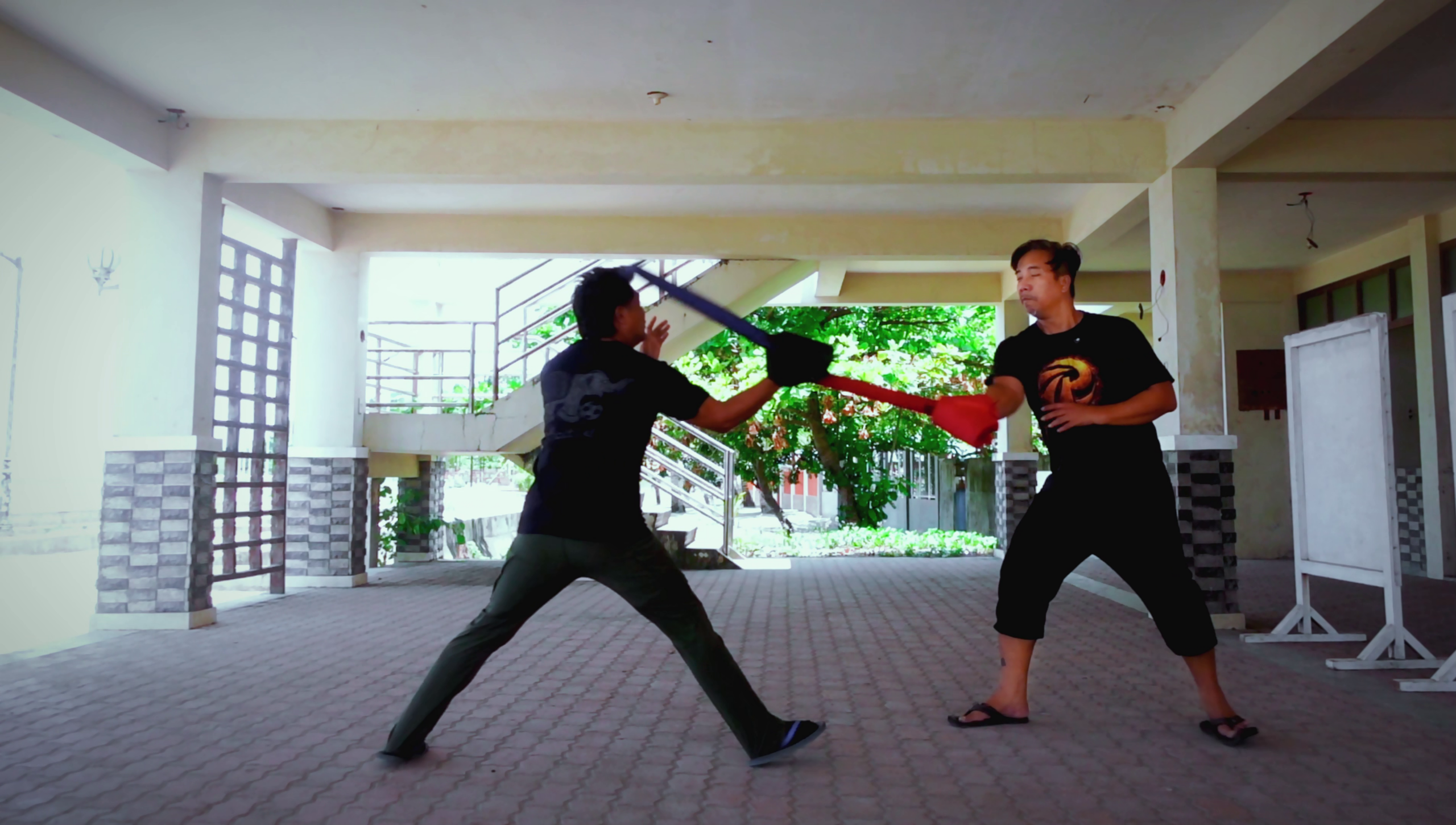
In De Campo 123 Original, if your strike is visible, everything built on top of it starts to fail.
Most people think a strike fails because it is too slow.
That is not the real problem.
A strike fails because it is seen before it lands.
That is telegraphing.
What a Non-Telegraphic Strike Really Is
A non-telegraphic strike is simply a strike that does not show itself before it arrives. There is no separate preparation. No obvious loading. No clear signal that something is about to happen.
This does not mean there is no structure. The body is still aligned. The mechanics are still there. The difference is that preparation is not separated from the action.
The strike does not come after preparation.
It comes out of aligned movement.
From the outside, it looks like nothing is happening, then the strike is already there.
It Is Not a Speed Problem
Most people try to fix this by moving faster. That approach is shallow.
If the strike is visible early, speed only helps you deliver a visible attack more quickly. The opponent still sees it. The timing is still read.
Real speed is not just how fast the hand or weapon moves. It is how soon the strike becomes a problem.
If the path is shorter, cleaner, and not announced, the strike arrives earlier in the exchange even without obvious speed.
Where Telegraphing Comes From
Telegraphing usually comes from three things. Loading, separation, and rhythm.
Loading is any visible preparation. A pullback, a lift, a chamber. Even small movements become signals if they happen before the strike.
Separation is the bigger issue. You decide first, then you move. That small gap between intention and action gives the strike away.
Rhythm is more subtle. If your timing is always the same, pause then strike, pause then strike, the opponent does not need to see anything. The pattern itself becomes predictable.
The Real Problem: Separation
Most people are trained to move like this:
strike → stop → strike → stop
It works in drills.
It breaks in real exchange.
Because there is no reset.
So the body hesitates. It looks for a moment to prepare. That hesitation becomes the telegraph. This is also why people freeze. They are waiting for a structure that is no longer there.
What You Do Instead
You do not remove preparation.
You stop making it separate.
Your position already contains the preparation. Your alignment is already there. The strike comes out of where you are, not after you get ready.
Instead of adjust then load then strike, the adjustment and the strike happen together. In its cleanest form, the adjustment is the strike.
No clear beginning. Nothing to read.
Path and Efficiency
Path matters more than people think. The longer the path, the earlier the strike is seen.
Even without obvious loading, wide or unnecessary movement will still get read. This is why everything has to stay direct. No extra motion. No decoration.
Rhythm Will Still Expose You
Even clean movement becomes predictable if the timing is fixed.
pause → strike
pause → strike
You do not need to see the body. You can feel when it is coming.
So the rhythm has to change. Sometimes immediate, sometimes delayed, sometimes continuous.
Continuity Is What Makes It Work
If you keep resetting, you keep announcing.
Every reset gives you away.
This is why continuity matters. When movement continues, the next action comes out of what is already happening. There is less separation and less chance to telegraph.
This is also what allows multiple strikes in one movement. Not because you are adding more, but because you are no longer stopping.
Stick vs Blade Makes It Obvious
With a stick, you can get away with bouncing and resetting. Strike, stop, strike again. That structure hides the problem.
With a blade, you cannot.
Once the edge enters, it does not bounce back. The motion continues. The recovery is not a pull, it is a continuation.
So if you rely on loading or resetting, it breaks immediately. The blade does not make you better. It just exposes the mistake faster.
This Comes Before Strategy
A lot of people want combinations, counters, and baiting.
But if your strike is visible, none of that works.
If the opponent sees your intention early, you are not controlling the exchange.
This is why non-telegraphic striking comes first. Before combinations, before speed, before advanced ideas.
Once the strike is no longer announced, everything else starts to work.
Bottom Line
A non-telegraphic strike is not about being fast or sneaky.
It is about removing the gap between intention and action.
When that gap disappears, the strike is no longer visible before it lands.
And once that happens, everything built on top of it becomes effective.






2 Responses
Again, all these articles are pure gold! I look forward to a book Maestro! I want a signed copy!
Appreciate that sir. If a book comes out, I’ll let you know right away. Keep training.