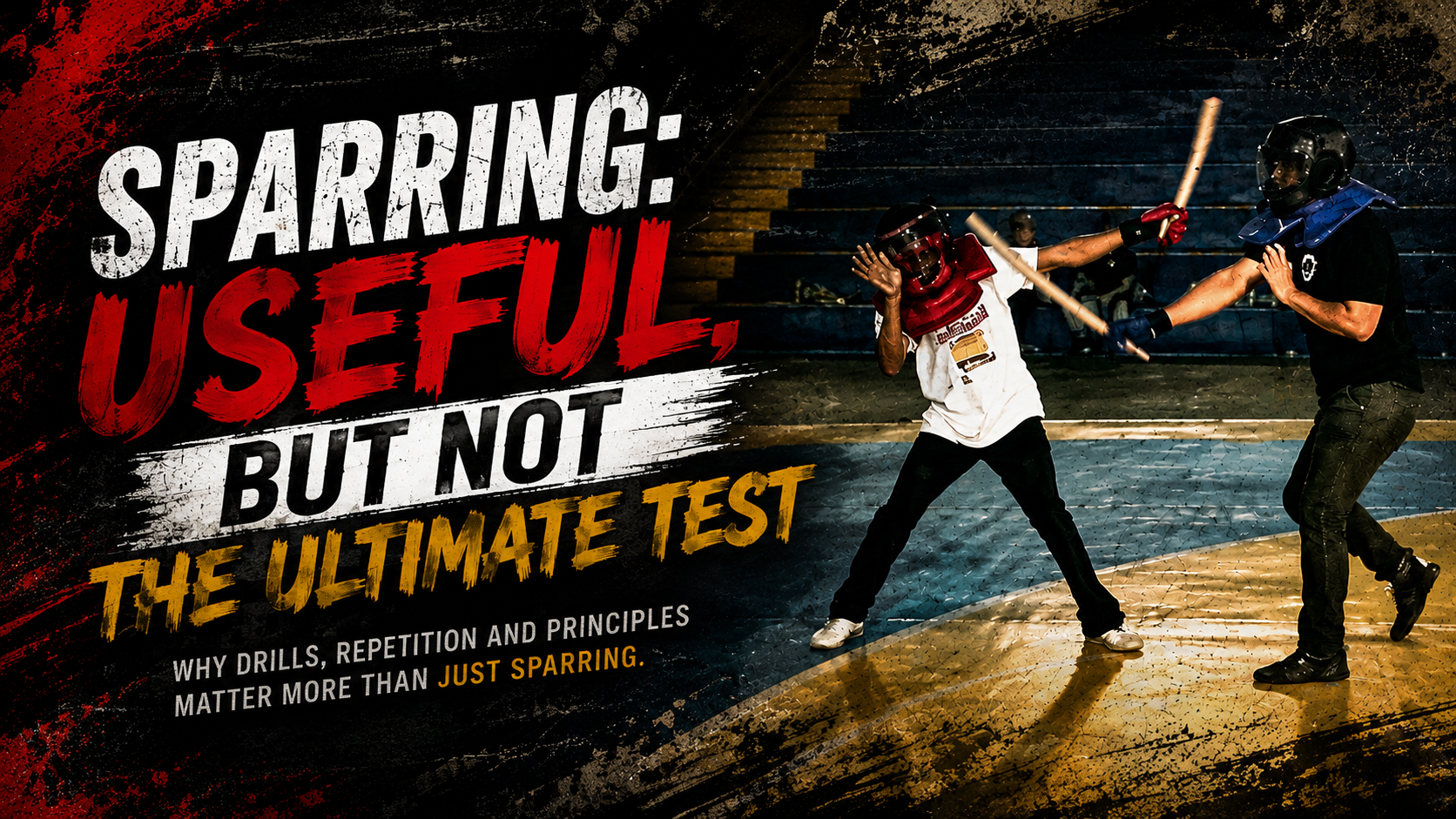
Is Sparring Really the Ultimate Test of a Martial Art?
There is a piece of advice that has become very common in martial arts today:
“If they don’t spar, leave.”
I understand where this comes from. In fact, there is some truth to it. If everything you practice only works against a cooperative partner who already knows exactly what you are going to do, then you should probably start asking questions.
But there is another extreme that I think we also need to question: the belief that sparring is the ultimate training method, and that everything else is somehow inferior.
I don’t believe that.
I was chatting with my friend Sir Jerry Davis recently when our conversation turned to sparring. He sent me something from a boxer who had also questioned the role people give to sparring. The boxer wasn’t against sparring, and neither am I. The point was simply that sparring should not become the be-all and end-all of martial arts training.
Sir Jerry and I ended up discussing this at some length, and I realized that this is something I have believed for many years.
Sparring Is a Tool
Sparring is useful.
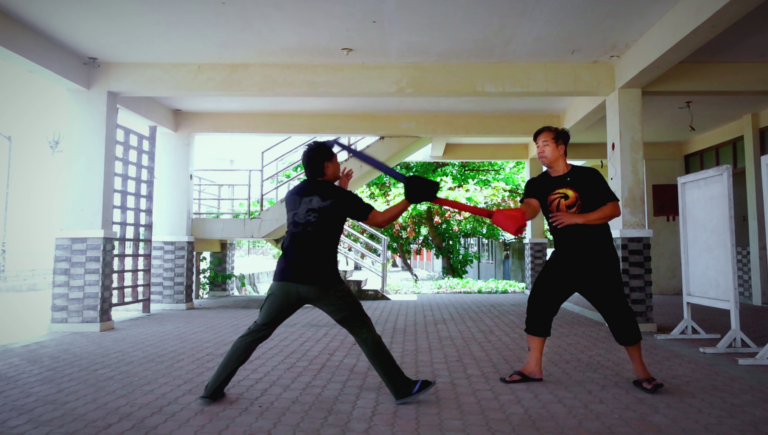
It gives us timing, pressure, unpredictability and interaction with someone who isn’t simply allowing us to perform a technique. It can expose weaknesses that we don’t notice when practicing a drill.
But sparring is still only a tool.
One problem is that many things that happen during sparring are incidental.
Suppose there is a particular situation that you need to learn how to deal with. During an entire sparring session, that exact situation might happen once. Maybe twice.
What did you really learn from encountering it twice?
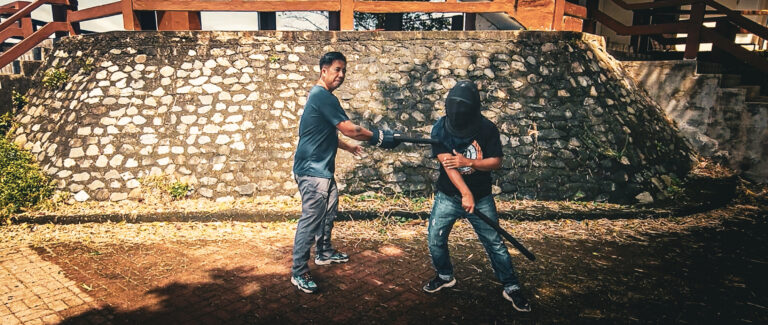
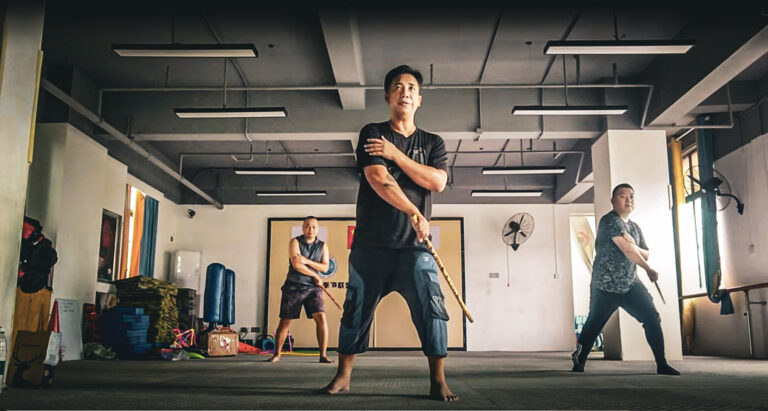
Compare that with deliberately creating the same problem and working on it 50, 100 or 500 times. You can study the distance. You can adjust your timing. You can make mistakes and correct them. Your partner can gradually increase his resistance, speed and intention.
Eventually you can put it back into a less predictable environment and see whether you can make it work.
This is one of the reasons repetition is so important.
Sparring gives you problems.
Drilling allows you to study those problems.
And then you can test the solutions again.
Sparring Is Not Reality Either
Sir Jerry brought up another interesting point.
We often hear that sparring is necessary because it is more “realistic.”
But realistic compared to what?
When you spar with someone from your own school, you probably already know him. He knows you. You may have trained together hundreds of times.
He knows something about the way you move. You know something about the way he moves.
Very often you are also practicing the same system.
A real opponent doesn’t necessarily give you that familiarity.
He may move completely differently. He may have no martial arts training at all. Or he may have training in something you have never encountered.
There is also the matter of protective equipment.
Modern protective gear allows us to do things that would otherwise be extremely dangerous. That is a very good thing because it allows us to train harder while reducing injuries.
But we should also recognize that protection changes behavior.
If I know that my hand, head and body are protected, I may willingly accept risks that I would never accept if we were holding hardwood sticks with no protection.
And underneath all of this is another difference: fear.
You know that your training partner isn’t really trying to kill you.
You know there are rules.
You know someone can stop the action.
So even hard sparring remains a controlled environment.
This doesn’t make sparring useless. It simply means that we should stop pretending that sparring somehow equals reality.
It doesn’t.
What About Jose Caballero?
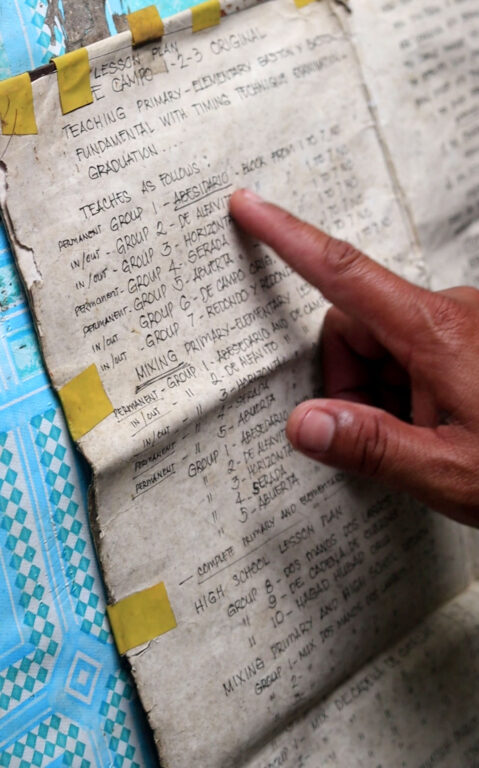
This becomes particularly interesting when we look at the history of De Campo 1-2-3 Original.
Grandmaster Jose D. Caballero developed De Campo during an era very different from ours.
There were no modern fencing masks, padded sticks and commercially available protective equipment waiting in everyone’s training bag.
His training was built around repeated practice.
Again and again and again.
The movements had to be developed through repetition because the alternative was not casually “pressure testing” everything with a friend while wearing modern safety equipment.
And yet Jose Caballero became one of the most celebrated Juego Todo fighters of his generation.
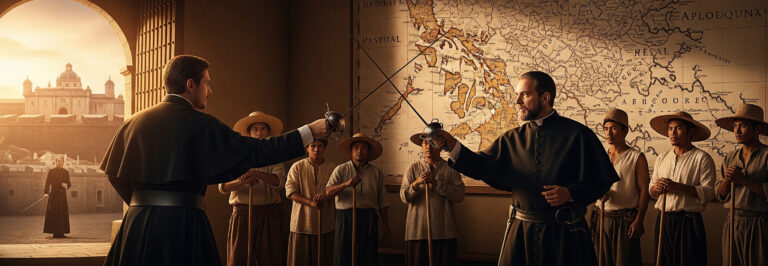
Juego Todo matches were commonly held during fiestas. Eskrimadors entered these events knowing that serious injury was possible. They fought with sticks without the kind of protective equipment we take for granted today.
These were dangerous matches, but describing every Juego Todo match as a “death match” can also be misleading.
The objective was not necessarily to kill the other fighter. In many ways it was a contest, albeit an extremely dangerous one. Fighters entered voluntarily, there were spectators, and there was an understanding of what they were participating in.
But sometimes things became personal.
Stories from Caballero’s fighting career include challengers who apparently had intentions that went well beyond simply winning a match. One famous account tells of a challenger arriving with a coffin, confident that Caballero would be the one placed inside it.
That is very different from sparring.
It is also worth remembering that these traditions existed in an unusual relationship with the law. The Philippine Revised Penal Code, enacted in 1930 and effective in 1932, specifically penalized participation in duels as well as challenging another person to a duel. Yet traditions of dangerous stick-fighting contests continued in various places.
So here we have an interesting contradiction.
If we applied today’s popular Internet advice literally and went back in time to watch Jose Caballero training, someone might look at all that repetitive practice and say:
“They aren’t sparring enough. Leave that school.”
Imagine walking away from Jose Caballero because of that.
Training Is Not Just Fighting Over and Over
This is where I think modern martial artists sometimes misunderstand training.
The purpose of training isn’t simply to reproduce a fight every day.
Training allows us to take a complicated event and break it into pieces.
Distance.
Timing.
Footwork.
Accuracy.
Power.
Reaction.
Recognition.
Counters.
Counter-to-the-counter.
You can isolate each problem and work on it repeatedly.
Then you reconnect the pieces.
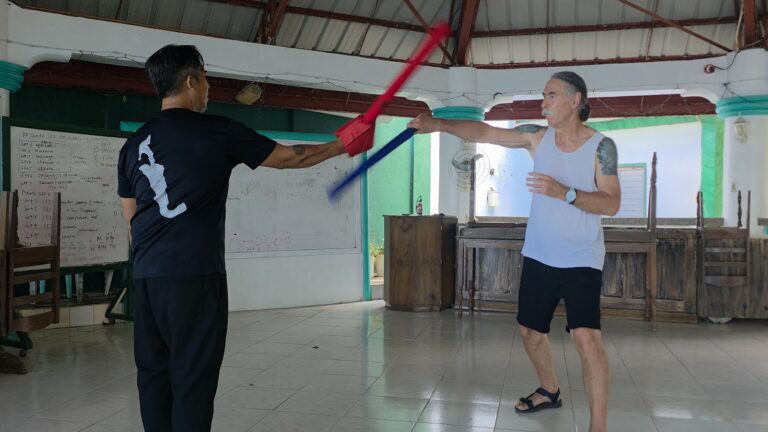
This is exactly what we do in De Campo.
When I feed a student a particular attack repeatedly, the purpose isn’t to pretend that an opponent in the street will attack exactly the same way ten times in a row.
Of course he won’t.
We repeat it because I want the student to have ten opportunities to solve the problem instead of waiting for that problem to randomly appear once during sparring.
Later we change things.
We increase the speed.
We increase the intensity.
We change the timing.
We introduce variations.
We allow counters.
We introduce uncertainty.
Eventually the student isn’t simply performing a memorized sequence anymore. He is recognizing what is happening and applying the principles he has practiced.
That progression matters.
When Sparring Becomes the Goal
This was perhaps the part of my conversation with Sir Jerry that interested me most.
His concern wasn’t really sparring itself. His concern was when sparring becomes an end in itself.
I agree.
Once winning the sparring session becomes the objective, training naturally begins adapting toward whatever allows you to win under those particular conditions.
If there are rules, you adapt to the rules.
If certain targets are prohibited, you stop worrying about them.
If protective equipment makes certain exchanges acceptable, you learn that those exchanges are acceptable.
None of this is inherently bad.
That is how sports develop, and combat sports can produce extraordinarily skilled fighters.
The problem comes when we confuse skill within that environment with the totality of martial skill.
They aren’t necessarily the same thing.
Drill It. Pressure It. Test It.
So am I against sparring?
Absolutely not.
I think sparring can be extremely valuable.
What I reject is the idea that sparring is the ultimate measurement of whether a martial art works, or that a system that doesn’t revolve around sparring must automatically be useless.
There is no single exercise that can reproduce everything involved in combat.
Sparring cannot do it.
Drilling cannot do it.
Forms cannot do it.
Pad work cannot do it.
Even competition cannot do it.
Each is a training method designed to develop particular attributes.
The important question isn’t simply:
“Do you spar?”
A better question might be:
“How does your training progressively prepare you to deal with someone who is no longer cooperating with you?”
That is a much more interesting question.
And in De Campo 1-2-3 Original, the answer begins with something deceptively simple:
Repetition.
You build the movement. You understand the distance. You develop accuracy. You learn the timing. You introduce resistance and unpredictability. Then you test what you have developed.
Jose Caballero didn’t become successful in Juego Todo because he spent every training session pretending to fight.
He trained so that when the time came to fight, the movements he needed were already there.
That distinction is important.
Learn the Method, Not Just the Techniques
This is also one of the ideas behind the De Campo 1-2-3 Master Class.
The objective isn’t simply to give students hundreds of techniques to memorize. It is to teach the training method, concepts and progression behind De Campo so that students understand why they are practicing something, how it develops, and eventually how it connects to less predictable situations.
The Master Class contains more than 200GB of training material covering the De Campo curriculum, principles, strategies and training methods, together with access to our regular online training sessions.
If you want to understand how an old Filipino fighting system built functional skill through structured training and repetition, rather than simply collecting techniques or relying on sparring alone, this is exactly what we explore in the De Campo 1-2-3 Master Class.
Sparring has its place.
But it is a tool.
It was never the whole toolbox.
Maestro Paolo Pagaling
De Campo 1-2-3 Original
2 Responses
This is a great article that every martial artists must read.
I saw a video of Maestro sparring with a guy who was physically much bigger than him who tried to bulldoze and even wrestle him after taking several head shots. This would not happen without that headgear. Just like the video shown in this article. His late shot would not have the same power or even the same trajectory after Maestro’s head shot. I doubt he would even be conscious. Love these articles Maestro! Pure Gold!